
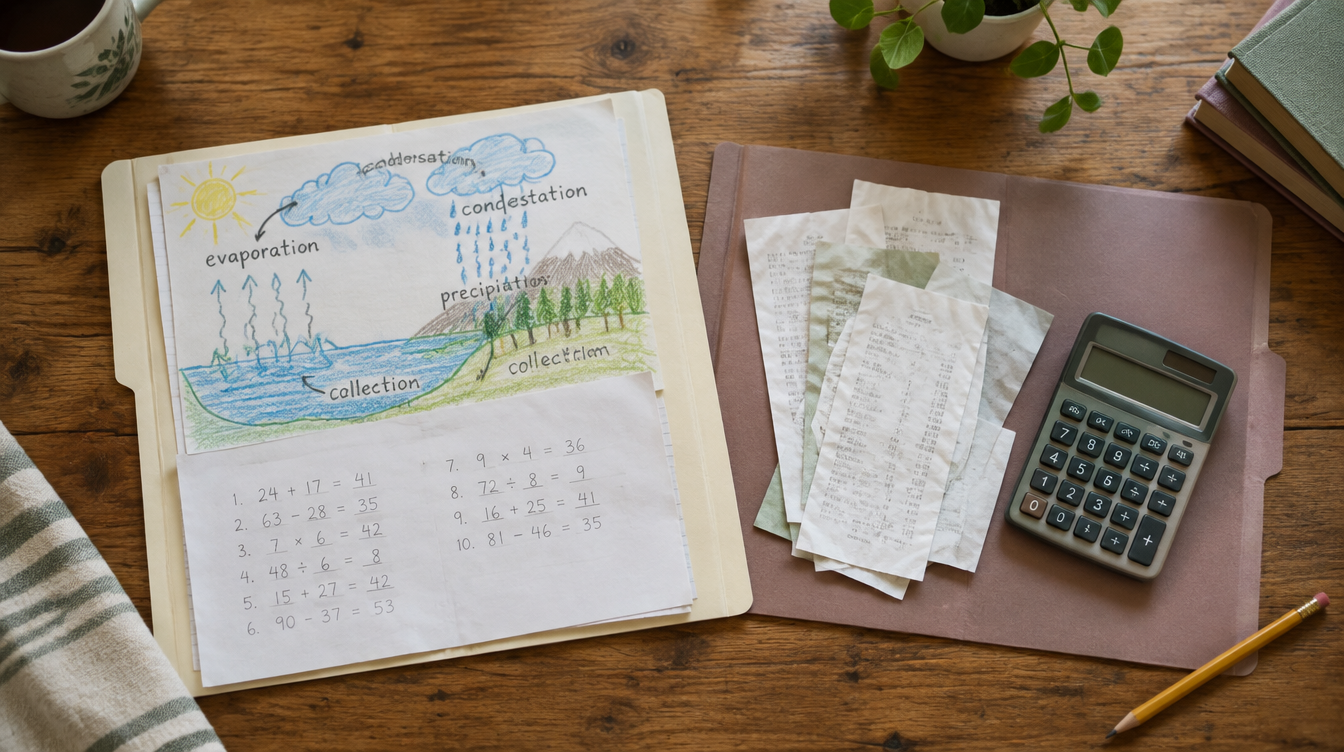
A manageable place to start
You can organize both folders in a short monthly session. There’s no need to build a second daily chore around filing them.
1. Give learning records their own folder
Label this folder with your child’s name and school year, such as Alex | 2026–2027 Learning. These are suggested ways to organize evidence, not a state-mandated checklist.
- A writing sample from early in the year and a later sample showing improvement.
- Selected math work, with a note about what your child completed independently.
- Project photos with a date and a brief explanation.
- Course reports or assessment results you already receive.
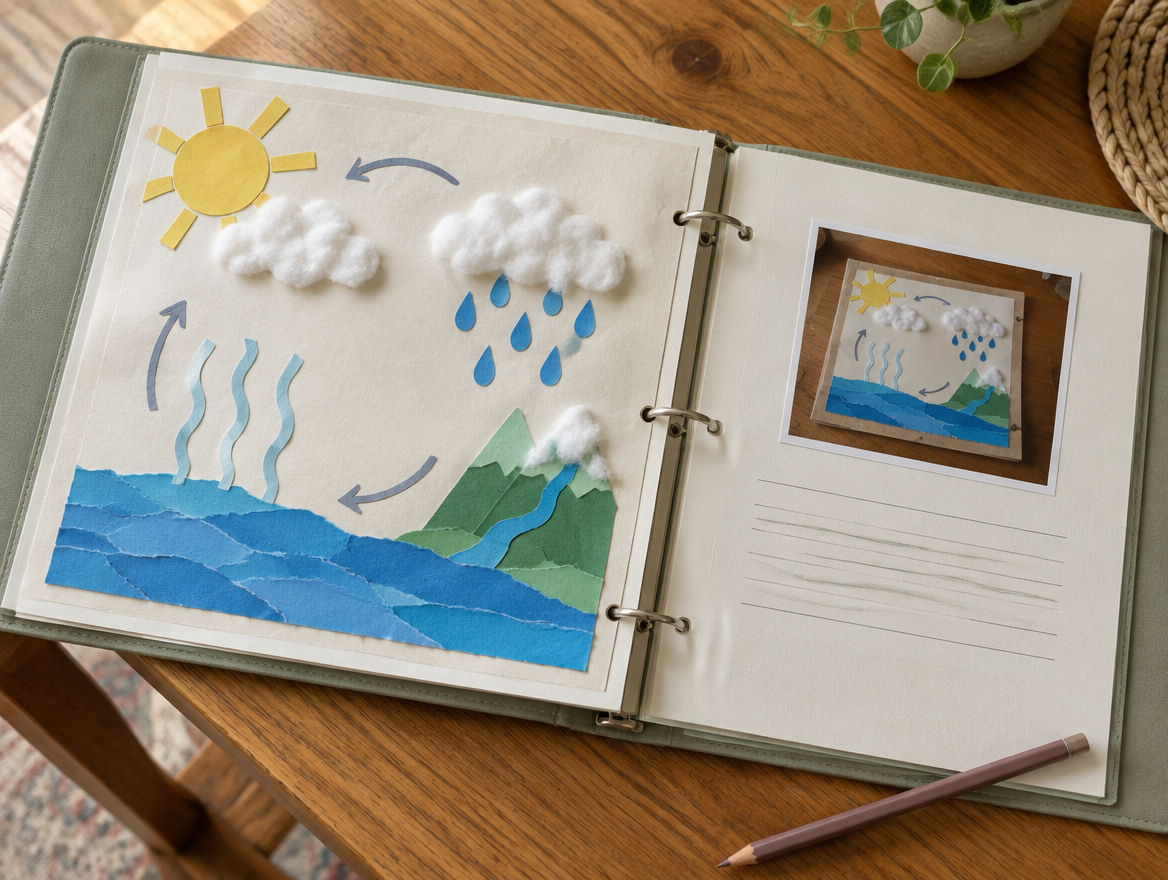
When a portfolio is part of program documentation
For families participating in Idaho’s Parental Choice Tax Credit program, the official FAQ says students attending a nonaccredited nonpublic school must have their growth documented through a portfolio of evidence or a learning record. That program condition should not be presented as a blanket requirement for every Idaho homeschool family.
2. Keep expense records by calendar year
Label the second folder 2026 Education Expenses. Keep the year of payment visible, even when materials are used across two school years.
Idaho’s Tax Commission says paid invoices or receipts must identify the information below. An order confirmation that does not show payment may leave information missing. Save the paid receipt when it becomes available.
As an organizing aid, add the child’s name and subject to the filename. Keep the original receipt unchanged.
- The provider.
- What you purchased.
- The amount.
- That payment was made.
- When you paid.
3. Separate “educational” from “eligible”
An activity can be worth including in a learning portfolio without qualifying for a tax credit.
Idaho’s program excludes extracurricular and nonacademic expenses, along with homeschool academic instruction provided by a parent. A learning note or photo does not change an expense’s eligibility. Check the official categories before counting a purchase toward a claim.
There is also an important year distinction: current Tax Commission guidance allows curriculum from more than one developer for 2026 and beyond, with the four core subjects covered. Don’t automatically apply that guidance to 2025 expenses.
4. Use one short monthly filing session
Start with a 15-minute timer. This is a suggested routine, not a guarantee that every month will take exactly 15 minutes.
Ongoing work: one monthly review, plus occasional follow-up for missing receipts. Required records or time-sensitive documentation may need attention sooner.
If you’re behind, start with this month and work backward as time allows. Label uncertain dates honestly.
- Gather: Open one paper inbox and your saved school-related emails.
- Choose: File a few useful learning samples under the correct child and school year.
- Check: Save paid receipts under the payment year and flag missing details.
- Back up: Confirm that your digital folders are included in your existing backup.
Source date and scope
Official agency guidance checked September 21, 2026. This article provides recordkeeping information, not individualized tax or legal advice. The folder system is an optional practical suggestion; the program guidance applies to Idaho. Recheck official instructions before applying or claiming expenses.